


Regional Analysis
The Landscape of Power Generation in Uganda
Understanding the intersection of industrial growth and energy infrastructure constraints.
Uganda's industrial sector is characterized by a rapid expansion in agribusiness and construction. However, the energy infrastructure often struggles to keep pace with this growth. In many regions, the national grid is subject to instability, making decentralized power generation a necessity rather than a luxury. For manufacturers and commercial operators, the ability to maintain a consistent power supply is the primary determinant of competitiveness. This has created a strong market for robust, medium-capacity diesel generators that can operate independently in harsh tropical environments.
Current market trends show a shift toward higher efficiency and lower emissions. Operators are increasingly moving away from basic open-frame units toward canopy-enclosed and super-silent models to meet evolving urban zoning laws and environmental standards. Furthermore, there is a growing demand for multifunctional equipment, such as the power tech generator series, which balances fuel economy with high peak-load capacity. The adoption of 3-phase systems is also increasing as industries upgrade to more sophisticated machinery requiring stable, balanced power loads.
The primary constraint for Ugandan operators remains the balance between initial capital expenditure and long-term operational costs. While low-cost imports exist, the total cost of ownership often spikes due to frequent breakdowns and poor fuel efficiency. This creates a significant opportunity for high-precision engineering solutions that offer longevity and lower maintenance requirements. The outlook remains positive, with sustainable energy integration—such as diesel-solar hybrids—becoming a future focal point for the region's resilient infrastructure.
Technology Path
The Evolution of Diesel Power Systems
From basic mechanical backup to intelligent, high-efficiency energy hubs.
Early Phase
Mechanical Stability
Focus was purely on raw power and mechanical durability. Generators were largely open-frame with manual starts, serving basic emergency needs without regard for noise or fuel efficiency.
Growth Phase
Enclosure & Automation
The introduction of sound-attenuating canopies and Automatic Transfer Switches (ATS) allowed generators to move into urban commercial zones and provide seamless backup.
Current Phase
Precision Efficiency
Modern systems now emphasize fuel precision, low-emission engines, and intelligent monitoring, optimizing the cost-per-kWh for high-demand industrial applications.
Integration of Intelligent Control
The transition from analog gauges to digital control panels allows for remote monitoring and predictive maintenance, significantly reducing the risk of unexpected failure in remote Ugandan sites.
Specialization of Power-Welding Units
Combining high-voltage power generation with welding capabilities has evolved to provide cleaner arcs and more stable current, essential for high-precision metalwork in infrastructure projects.
Environmental Compliance Engineering
Engineering focus has shifted toward reducing NOx and particulate emissions, ensuring that diesel power remains viable under tightening global and local environmental regulations.
Future Outlook
Key Trends Shaping Power Generation
How technological shifts are redefining the operational standards for diesel power.
Hyper-Efficient Fuel Combustion
New injection technologies are maximizing every drop of diesel, reducing operational costs for energy-intensive Ugandan factories while lowering carbon footprints.
Noise-Neutral Urban Design
The demand for "invisible" power—generators that operate within strict decibel limits—is driving the development of advanced acoustic chambers for commercial use.
Hybrid Energy Synchronization
Diesel units are increasingly acting as the "anchor" for solar-diesel hybrid plants, managing peak loads while solar handles base loads to optimize costs.
Smart Load Management
Digital controllers can now automatically prioritize critical loads during limited fuel scenarios, ensuring that essential systems never lose power.
The integration of IoT in power generation is perhaps the most significant leap. By deploying sensors that monitor vibration, temperature, and oil quality in real-time, operators in Uganda can move from reactive "break-fix" cycles to predictive maintenance. This is particularly vital for the 7kw generator users in smaller commercial setups, where a single day of downtime can significantly impact daily revenue. The goal is a "zero-outage" environment where the system alerts the operator before a failure occurs.
Furthermore, the shift toward 3-phase power is not just about capacity but about power quality. As Ugandan industries import more precise CNC machinery and medical equipment, the demand for "clean" power—free from harmonic distortion—has skyrocketed. This requires high-quality alternators and sophisticated voltage regulators. The industry is moving toward a holistic "energy solution" approach, where the generator is part of a broader strategy involving power conditioning and energy storage.
Practical Application
Real-World Power Deployments in Uganda
How tailored power solutions solve specific operational problems across different sectors.
01
Kampala Commercial Hubs - Silent Power Backup
In densely populated urban districts, retail complexes require constant power for HVAC and lighting but must adhere to noise laws. Implementing super-silent diesel sets ensures that business continues during grid failures without disturbing neighboring residents, maintaining a professional environment and regulatory compliance.
02
Northern Uganda Construction - Welder-Generator Hybrid
On remote infrastructure projects, the logistics of transporting separate power and welding units are costly. By deploying a diesel welder generator, teams can perform heavy-duty structural welding and power their site office from a single fuel-efficient source, drastically reducing transport overheads and site footprint.
03
Regional Healthcare Centers - Critical Life Support
Small clinics in rural areas rely on electricity for vaccine refrigeration and emergency equipment. A reliable 20kw diesel generator with a fast-acting ATS provides a failsafe energy source, ensuring that critical medical services remain operational regardless of the state of the local power grid.
04
Agribusiness Processing Plants - 3-Phase Industrial Load
Coffee and tea processing facilities use heavy-duty motors that require balanced 3-phase power. Utilizing a 3 phase diesel generator prevents motor burnout caused by phase imbalance and provides the high starting torque necessary for large industrial crushers and conveyors, optimizing production throughput.
05
Telecommunications Towers - Remote Site Stability
Cell towers in remote highlands face extreme weather and limited accessibility. Compact, canopy-enclosed units with extended fuel tanks provide the long-term autonomy required to keep communication networks active, with ruggedized components that resist dust and humidity infiltration.
Field Perspectives
Representative Operator Insights
Illustrative scenarios based on common industrial power requirements in the East African region.
For urban retail operations, the primary concern is always the noise. Shifting to a super-silent canopy system has allowed us to maintain 24/7 operations during load shedding without facing complaints from local authorities or neighbors, ensuring seamless customer service.
In remote construction, the combination of a welder and a generator in one unit is a game-changer. It simplifies our logistics and reduces fuel consumption by eliminating the need to run two separate engines for power and welding tasks on site.
Stability is everything for medical refrigeration. Having a dedicated backup system with an automatic transfer switch means we no longer worry about vaccine spoilage during power cuts, which is critical for community health in rural areas.
Our Heritage
Two Decades of Power Engineering
Jiangsu Kaichen Electric Power Equipment Co., Ltd. is built on a foundation of technical precision and reliability.
20 Years Ago
Company Foundation
Established with a core focus on mastering the engineering and manufacturing processes of diesel generators. We began by refining our craft to meet the fundamental power needs of various industrial sectors.
Growth Era
Technical Expansion
Scaled our workforce to over 200 professionals, including expert engineers and quality control specialists. We expanded our product line to include silent, super-silent, and canopy-enclosed diesel generator sets.
Present Day
Global Partnership Focus
Now dedicated to delivering uninterrupted, reliable power solutions worldwide. We champion precision and innovation to empower clients in sectors like telecommunications, healthcare, and construction.

High Quality MTU Diesel Generators Series

SDEC Diesel Generators Factory Reliable Power Solutions Suppliers from China
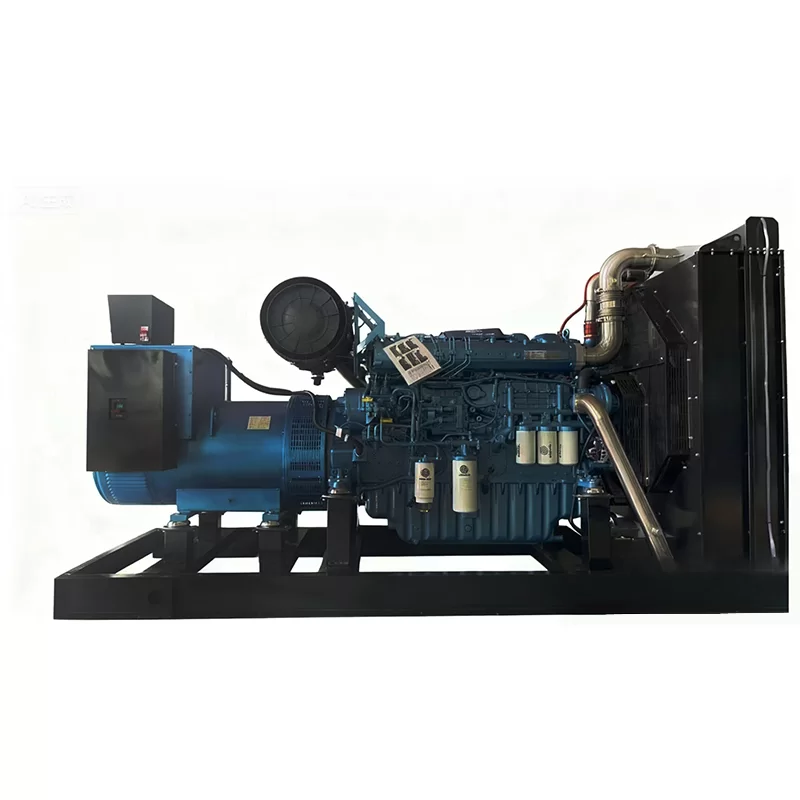
Industrial Open Type Generator

Industrial YUCHAI Diesel Generators Series
Expert Advice
Frequently Asked Questions about Diesel Power
Technical guidance to help you select and maintain the right generator for your site.
What is the difference between a standard and a super-silent diesel generator?
The primary difference lies in the acoustic engineering. Standard generators often use basic open frames or light canopies. Super-silent models utilize double-walled steel enclosures with high-density sound-absorbing foam and specialized exhaust mufflers. This drastically reduces decibel levels, making them ideal for residential or urban commercial areas where noise ordinances are strictly enforced, whereas standard units are better suited for industrial sites where noise is less of a concern.
How do I determine if I need a 3 phase diesel generator or a single phase unit?
The choice depends on your load requirements. Single-phase generators are typically used for light commercial or residential applications (lighting, small electronics). 3-phase generators are essential for industrial machinery, large HVAC systems, and heavy motors. These loads require balanced power across three lines to operate efficiently. If you are powering industrial equipment in a factory, a 3-phase system is necessary to prevent motor overheating and ensure stable performance.
Can a diesel welder generator actually replace both a welder and a standard generator on site?
Yes, for most construction and maintenance applications. These hybrid units are engineered to provide a high-amperage DC output for welding and a stable AC output for power tools and lighting. This eliminates the need for two separate machines, reducing fuel consumption and transportation logistics. However, it is important to verify that the specific kVA rating of the generator portion meets the total electrical load of your site tools while the welder is active.
How does high ambient temperature in Uganda affect generator performance?
High temperatures reduce the density of intake air and the efficiency of the cooling system, which can lead to "derating"—where the generator cannot output its full rated power. To combat this, we use oversized radiators and optimized airflow paths. Operators should ensure that generators are placed in well-ventilated areas with sufficient clearance from walls to prevent heat recirculation, which is a common cause of overheating in tropical climates.
What are the most critical maintenance steps for diesel generators in dusty environments?
In dusty regions, the air filtration system is the most critical point. We recommend checking and cleaning air filters more frequently than the standard manual suggests to prevent engine choking. Additionally, monitoring oil quality and ensuring that fuel filters are replaced regularly prevents contaminants from reaching the injectors. Using a canopy-enclosed model also helps significantly by protecting the core components from direct dust infiltration.
Which capacity should I choose: a 7kw generator or a 20kw diesel generator?
The choice depends on your "Peak Load." A 7kw unit is suitable for small offices, backup lighting, or small-scale commercial kiosks. A 20kw unit is designed for larger workshops, small medical clinics, or as a primary power source for a small industrial process. A general rule is to size your generator so that your average load is around 60-80% of the rated capacity; this ensures fuel efficiency and prevents excessive wear on the engine during start-up surges.
Ready for Reliable Power
Secure Your Industrial Continuity with Kaichen Power Solutions
Whether you are managing a construction site in remote Northern Uganda or a commercial hub in Kampala, our team of 200+ professionals can help you specify the perfect power system. From silent canopies to high-capacity 3-phase sets, we provide the technical consultation and robust hardware needed to eliminate downtime and protect your equipment.
Discuss Your Requirements


